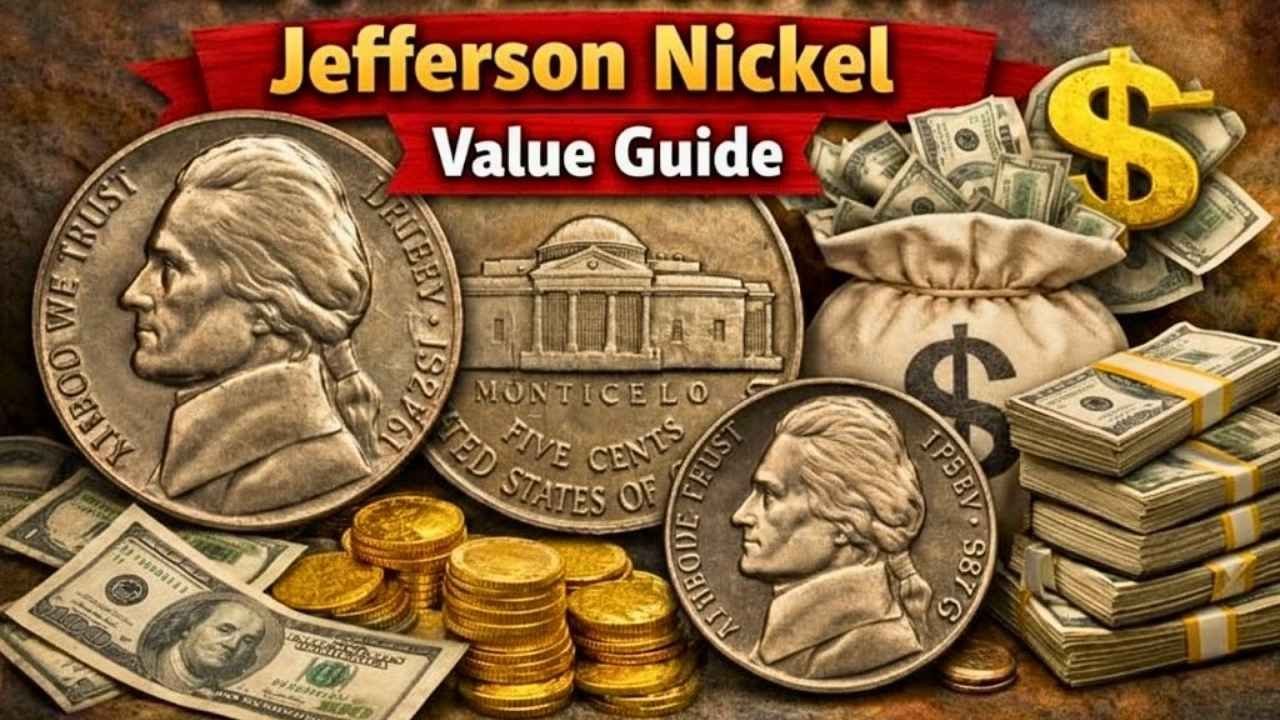
The Jefferson Nickel is one of the longest-running and most widely collected coin series in American history. First released in 1938, the coin replaced the Buffalo Nickel and introduced a refined portrait of Thomas Jefferson on the obverse, with his historic Virginia estate, Monticello, featured on the reverse.
While billions of Jefferson Nickels have circulated over the decades, a select group of rare dates, mint errors, and high-grade varieties have transformed ordinary five-cent pieces into highly desirable collectibles. In 2026, serious collectors continue to pursue these key issues, with top examples selling for thousands — and in rare cases, tens of thousands — of dollars.
The Origins and Evolution of the Jefferson Nickel

The Jefferson Nickel debuted in 1938 with a design by Felix Schlag, who won a national design competition. His classic depiction of Jefferson remains one of the most recognizable portraits in U.S. coinage.
From 1942 to 1945, wartime metal shortages led to a temporary composition change. These “War Nickels” were struck in a 35% silver alloy to conserve nickel for military production. Large mintmarks were placed above Monticello, making them easy to identify and particularly collectible.
In 2004 and 2005, the series briefly departed from its traditional reverse through the Westward Journey program, before returning to Monticello in 2006 with a refreshed obverse portrait.

Across nearly nine decades, small mintages, design adjustments, and striking errors have created valuable opportunities within this otherwise common series.
Why Certain Jefferson Nickels Are Valuable
Most Jefferson Nickels remain worth face value. However, several factors significantly increase value:
Low Mintage
Coins produced in smaller quantities are inherently scarcer and more desirable.
Mint Errors and Varieties

Doubled dies, repunched mintmarks, and overstrikes often create highly collectible anomalies.
Condition
High-grade coins, especially those designated as “Full Steps” (with clearly defined steps on Monticello), command strong premiums.
Historical Context
Wartime issues and transitional design years carry added historical appeal.
When rarity aligns with pristine preservation, values can rise dramatically.
Top 5 Rare Jefferson Nickels Worth Big Money
1939 Doubled Monticello
The 1939 Doubled Monticello Jefferson Nickel features noticeable doubling on the words “Monticello” and “Five Cents.”
This early-series error is scarce, especially in Mint State grades. In MS-65 condition, values typically range from $1,000 to $5,000. Coins with Full Steps designation can sell for even more.
1942-D Over Horizontal D
The 1942-D Over Horizontal D Jefferson Nickel is a dramatic wartime mintmark variety. The “D” mintmark was punched over a previously misaligned horizontal “D,” creating a clear and collectible error.
High-grade examples can command $2,000 to $10,000, particularly when certified and well-struck.
1950-D
The 1950-D Jefferson Nickel is one of the most famous key dates in the series. With only 2.6 million minted, it holds the lowest mintage of regular-issue Jefferson Nickels.
While circulated examples remain affordable, uncirculated specimens in MS-65 condition often range from $500 to $3,000. Full Steps examples can exceed those levels.
1969 Doubled Die Obverse
The 1969 Doubled Die Obverse Jefferson Nickel is a rare and highly sought-after variety. Clear doubling appears in the date and inscriptions.
Because relatively few examples were identified, high-grade pieces can sell between $5,000 and $20,000 depending on condition and certification.
2004-D Peace Medal Variety
Part of the Westward Journey series, the 2004-D Peace Medal Jefferson Nickel features the Peace Medal reverse design. Certain high-grade or distinctive strike varieties command premiums in today’s market.
In MS-65 condition, values generally range from $200 to $1,000, with Full Steps examples achieving stronger prices.
Jefferson Nickel Value Snapshot 2026
Here are typical premium ranges for high-grade examples:
- 1939 Doubled Monticello (MS-65): $1,000 – $5,000
- 1942-D Over Horizontal D (MS-65): $2,000 – $10,000
- 1950-D (MS-65): $500 – $3,000
- 1969 Doubled Die Obverse (MS-65): $5,000 – $20,000
- 2004-D Peace Medal Variety (MS-65): $200 – $1,000
Prices vary based on eye appeal, certification, and overall market demand.
How to Identify Valuable Jefferson Nickels
Close examination is critical.
Look for doubling in lettering and dates, particularly on known doubled die varieties. Inspect mintmarks carefully for overpunching or irregular placement. For the 1950-D, confirm the “D” mintmark beneath Monticello.
Examine the steps of Monticello. Coins with fully separated steps — known as “Full Steps” — are far scarcer in high grades and significantly more valuable.
High-grade coins should display strong luster, minimal contact marks, and crisp details. Professional grading adds credibility and enhances resale potential.
Market Trends in 2026
In 2026, Jefferson Nickels continue to gain recognition as an accessible yet rewarding series. Several trends are shaping the market:
Growing demand for Full Steps certified examples
Increased visibility of modern doubled die varieties
Steady appreciation for key low-mintage dates
Strong online auction participation
Collectors are increasingly focusing on quality over quantity, prioritizing pristine surfaces and rare error varieties over bulk accumulations.
Modern varieties from the 1960s onward have also gained traction, reflecting broader interest in overlooked error coins.
Smart Strategies for Collectors
Successful collectors often:
Research mintages and population reports
Prioritize certified high-grade examples
Avoid cleaning coins, which reduces value
Focus on strike quality as well as numeric grade
Track auction results to understand pricing momentum
Building a targeted collection around key dates and recognized varieties can deliver long-term satisfaction and financial upside.
Why the Jefferson Nickel Still Matters
The Jefferson Nickel demonstrates that value is not defined by denomination. Though worth only five cents in everyday commerce, select examples represent meaningful historical artifacts and serious collectible assets.
From early doubled dies to wartime mintmark errors and low-mintage keys, the series offers depth, diversity, and opportunity. In 2026, Jefferson Nickels continue to balance affordability with upside potential — making them one of the most dynamic areas in modern U.S. coin collecting.
For attentive collectors, the next hidden treasure may already be waiting in circulation — proof that even the smallest coins can carry remarkable value.