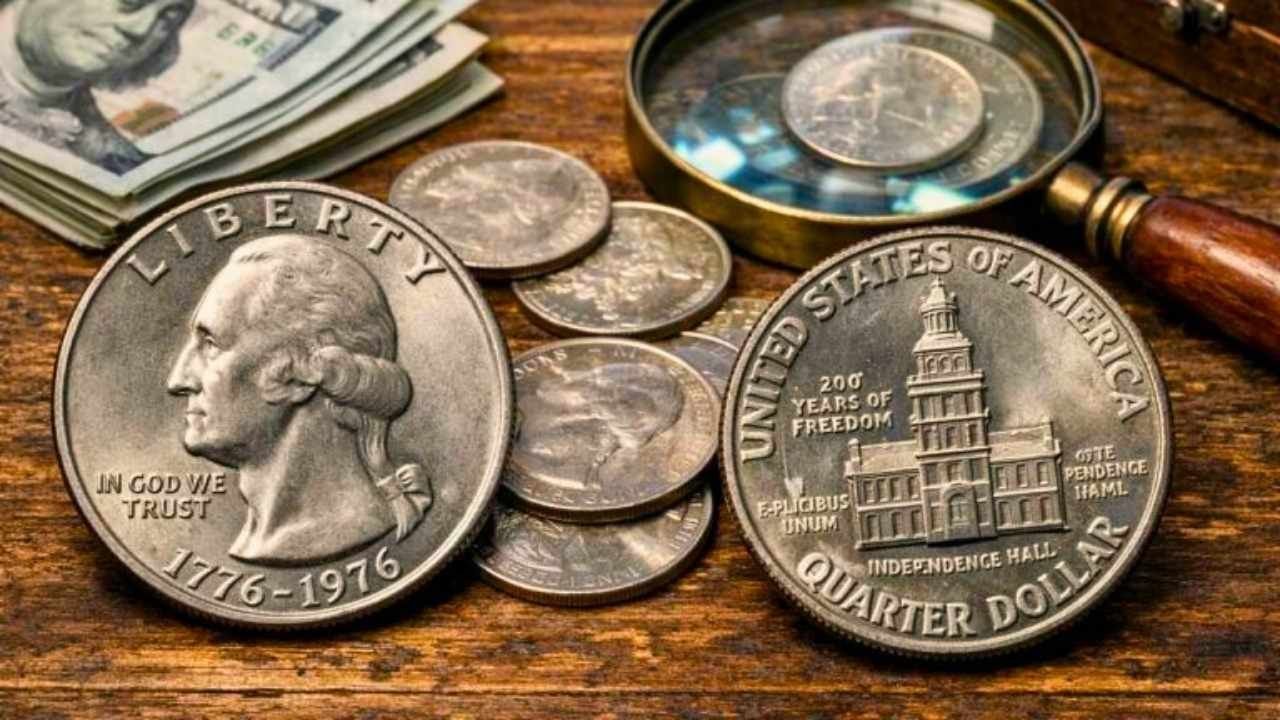
The Bicentennial Quarter is one of the most recognizable coins ever issued by the United States Mint. Released in 1975 and 1976 to commemorate America’s 200th anniversary of independence, this dual-dated quarter — “1776–1976” — became an instant national symbol.
Millions were struck, and most remain worth only face value. Yet a select group of silver editions, pristine high-grade examples, and dramatic minting errors have transformed ordinary pocket change into serious collector assets. In 2026, rare Bicentennial Quarters are quietly commanding hundreds — and in some cases thousands — of dollars.

For those willing to look closely, hidden value may still be circulating.
The Story Behind the Bicentennial Quarter
The Bicentennial Quarter was part of a three-coin commemorative program that also included special half dollars and dollar coins. Rather than altering the obverse portrait of George Washington, the Mint introduced a one-time reverse design selected through a national competition.
Designed by Jack L. Ahr, the reverse features a colonial drummer accompanied by a torch encircled by thirteen stars, symbolizing the original colonies. The design captured patriotic enthusiasm during the bicentennial celebration and remains a nostalgic favorite.

Unlike standard quarters, all Bicentennial issues carry the dual date “1776–1976,” even though they were minted over two years.
Silver vs. Copper-Nickel: Understanding the Difference
Most Bicentennial Quarters were struck in copper-nickel clad composition for circulation. However, the U.S. Mint also produced special collector versions struck in 40% silver.
These silver editions were sold in mint and proof sets rather than released into general circulation. They contain intrinsic silver value in addition to collector appeal, making them more desirable.

Identifying silver versions requires attention. Silver coins have a brighter edge without the copper-colored core visible on clad coins. They also weigh slightly more and produce a distinctive sound when gently tapped.
Why Some Bicentennial Quarters Are Valuable
While the mintage numbers were high, several factors influence premium value in 2026:
Silver Composition
The 40% silver versions carry both bullion value and numismatic interest.
Proof Finish
Proof coins were specially struck with mirrored fields and frosted details. High-grade proof examples, particularly silver proofs, are in steady demand.
Mint Errors
Dramatic minting mistakes — such as off-center strikes or wrong planchet errors — significantly increase rarity.
High Mint State Grades
Circulation coins graded MS-67 or higher are surprisingly scarce and can command strong premiums.
When rarity meets condition, values rise well above face value.
Rare Varieties Worth Watching
Silver Clad Editions
Silver Bicentennial Quarters in Mint State 65 condition generally range between $30 and $100. Exceptional examples with superior eye appeal can exceed those levels, particularly if certified.
Proof Silver Versions
High-grade silver proofs graded PR-69 often trade between $50 and $150. Near-perfect PR-70 coins can achieve even stronger results depending on certification and demand.
Major Mint Errors
Error coins generate the most excitement. Off-center strikes, double strikes, and wrong planchet errors can bring $500 to $5,000 or more.
Wrong planchet examples — where a quarter is mistakenly struck on a smaller or foreign coin blank — are especially prized due to their dramatic visual differences.
High-Grade Circulation Coins
Even standard copper-nickel circulation quarters can carry surprising value if preserved in pristine condition.
Coins graded MS-67 or higher may range from $500 to $3,000+, particularly when luster, strike sharpness, and surface preservation are exceptional.
Bicentennial Quarter Value Snapshot 2026
Here is a simplified overview of current market ranges:
- Circulated Copper-Nickel: $0.25 – $1
- Uncirculated MS-65: $10 – $25
- Silver Clad MS-65: $30 – $100
- Proof Copper-Nickel PR-69: $15 – $40
- Proof Silver PR-69: $50 – $150
- Major Errors: $500 – $5,000+
- High-Grade MS-67+: $500 – $3,000+
Final prices depend heavily on grading, visual appeal, and auction competition.
How to Identify a Valuable Bicentennial Quarter
Start by examining the coin’s edge. A visible copper stripe indicates a standard clad version, while a solid silver-colored edge suggests a 40% silver issue.
Next, inspect the surface. Proof coins exhibit mirror-like finishes and crisp design elements. Circulation coins with sharp details and minimal contact marks may warrant closer evaluation.
Look carefully for unusual features such as off-center strikes, doubling in lettering, or irregular thickness. Weighing the coin can also reveal potential wrong planchet errors.
For coins that appear exceptional, professional grading provides authentication and an objective condition assessment, significantly enhancing resale potential.
Market Trends in 2026
In 2026, the Bicentennial Quarter remains popular due to its historical symbolism and broad accessibility. Several trends are influencing its market performance:
Growing interest in high-grade modern coins
Rising attention to certified mint errors
Continued demand for silver-backed collectibles
Nostalgia-driven collecting among new entrants
While common examples remain abundant, premium specimens continue to attract competitive bidding in both live and online auctions.
Collectors increasingly focus on top-condition coins rather than bulk accumulations, driving demand for the finest known examples.
Smart Collecting Strategies
Collectors seeking value should:
Prioritize condition above quantity
Learn to distinguish silver from clad versions
Study known error types before purchasing
Avoid cleaning coins, which reduces value
Track auction records to understand pricing trends
Patience and education often yield the best results in modern commemorative coin collecting.
Why the Bicentennial Quarter Still Matters
The Bicentennial Quarter represents more than currency. It captures a defining national milestone and translates it into a compact, tangible artifact.
Nearly five decades later, its design continues to resonate with collectors who appreciate both history and opportunity. While most examples remain modest in value, select varieties have quietly become serious assets.
In 2026, the message is clear: extraordinary value can still hide in everyday change. For those willing to look closely, the Bicentennial Quarter may be more than a nostalgic keepsake — it could be a hidden fortune.