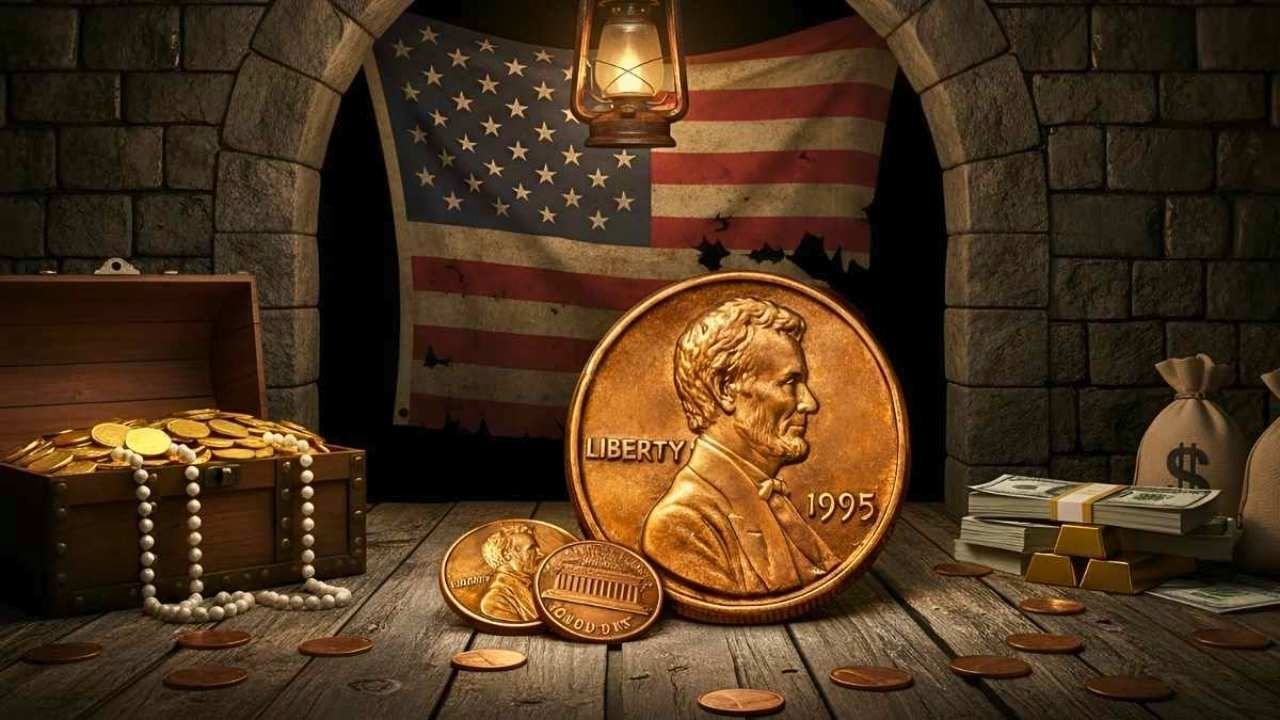
At first glance, a 1995 Lincoln penny appears ordinary. Billions were struck, and most remain worth exactly one cent. Yet among these everyday coins exists one of the most famous modern mint errors in American numismatics — the 1995 Doubled Die Obverse.
In 2026, this coin continues to command strong premiums, with high-grade examples selling for hundreds or even thousands of dollars. For collectors and investors seeking accessible entry into error coin markets, the 1995 Doubled Die offers a rare combination of visibility, affordability, and historical intrigue.
The Legacy of the Lincoln Cent

The Lincoln cent debuted in 1909 to commemorate the 100th anniversary of Abraham Lincoln’s birth. Designed by Victor David Brenner and struck by the United States Mint, it became the first circulating U.S. coin to feature a real historical figure.
Over the decades, the reverse design evolved from the Wheat ears (1909–1958) to the Lincoln Memorial (1959–2008), and later to the Union Shield design introduced in 2010.
Throughout its long production history, the Lincoln cent has produced some of the most celebrated mint errors in U.S. coinage — including the legendary 1955 Doubled Die and, four decades later, the highly collectible 1995 Doubled Die Obverse.
What Makes the 1995 Doubled Die Special?
The 1995 Doubled Die is not simply a minor anomaly. It features strong, clear doubling on the obverse (front) of the coin — most prominently visible in:
- The word “LIBERTY”
- The motto “IN GOD WE TRUST”
- Portions of the date
Unlike subtle doubling that requires magnification, this variety displays bold separation that is often visible to the naked eye. That accessibility has made it one of the most popular modern error coins ever released into circulation.
Although thousands entered circulation before the error was widely recognized, relatively few remain in pristine, high-grade condition. That scarcity at upper grade levels drives much of its premium value today.
How the Doubled Die Error Occurred

To understand its value, it helps to understand the minting process.
A doubled die error occurs during the die creation stage. When the working die receives multiple impressions from the hub — and those impressions are slightly misaligned — a doubled image is transferred to every coin struck from that die.
This is fundamentally different from machine doubling, which occurs during the strike itself and typically lacks depth or clarity.
The 1995 Doubled Die was the result of misalignment during the hubbing process, creating one of the most dramatic modern doubled dies ever produced.
Because the doubling is part of the die, every coin struck from it exhibits the same error characteristics.
1995 Doubled Die Value Chart (2026 Estimates)
Market values in 2026 vary based on grade, eye appeal, and certification:
- Circulated examples: $20 – $50
- MS-60 (Uncirculated): $75 – $150
- MS-65 (Gem Uncirculated): $200 – $500
- MS-67 (Superb Gem): $1,000 – $2,500
- Proof examples: $500 – $3,000
Top-population coins certified at elite grades may exceed these ranges depending on auction demand and registry competition.
How to Identify a Genuine 1995 Doubled Die
Because the coin carries premium value, careful authentication is essential.
1. Examine “LIBERTY”
The doubling is bold and separated, especially visible on the letters “B,” “E,” and “R.” The extra outlines appear raised and well-defined.
2. Inspect “IN GOD WE TRUST”
Clear separation is visible on most letters of the motto. The doubling should appear strong and consistent, not flat or shelf-like.
3. Check for True Hub Doubling
True doubled dies show depth and rounded secondary images. Machine doubling, by contrast, often appears flat and lacks clear separation.
4. Verify Mintmark and Date
Most 1995 Doubled Die cents were struck at Philadelphia and do not carry a mintmark. Be cautious of altered or misrepresented coins.
Professional grading services remain the safest method for authentication and maximizing resale potential.
Why Collectors Still Pursue It in 2026
Several factors continue to support demand:
Affordability. Unlike six-figure rarities, the 1995 Doubled Die remains accessible to a broad range of collectors.
Visibility. The doubling is dramatic and easy to see, making it satisfying to own and display.
Modern appeal. Many collectors enjoy the idea that a valuable coin could still be discovered in circulation.
Registry competition. High-grade certified examples attract strong bidding from collectors building competitive sets.
As modern coin collecting expands globally through digital marketplaces, coins like the 1995 Doubled Die maintain strong liquidity and steady price performance.
Smart Buying Strategies
If you are considering adding one to your collection:
- Prioritize eye appeal and strike quality
- Avoid coins with heavy spotting or discoloration
- Seek certified examples for higher-grade purchases
- Compare population reports before paying top-tier prices
- Store coins in protective holders in climate-controlled environments
Strategic acquisition is more important than impulse buying, especially as grading standards tighten at higher levels.
Common Misconceptions
Not every 1995 penny with slight doubling is valuable.
Machine doubling is common and does not carry significant premium value. True doubled dies display rounded, clearly separated design elements — not flat, smeared edges.
Additionally, circulated examples remain affordable. The dramatic price increases occur primarily at Mint State 65 and above.
Final Thoughts
The 1995 Doubled Die Lincoln penny proves that modern coins can still offer meaningful discovery and financial upside. What began as a production error evolved into one of the most recognized and collected varieties of the late 20th century.
In 2026, it remains a gateway coin for new collectors and a registry challenge for seasoned numismatists. Whether found in pocket change or acquired through auction, this coin represents the enduring excitement of coin collecting — where a single cent can carry a story, a lesson in minting history, and potentially, a surprising return on investment.