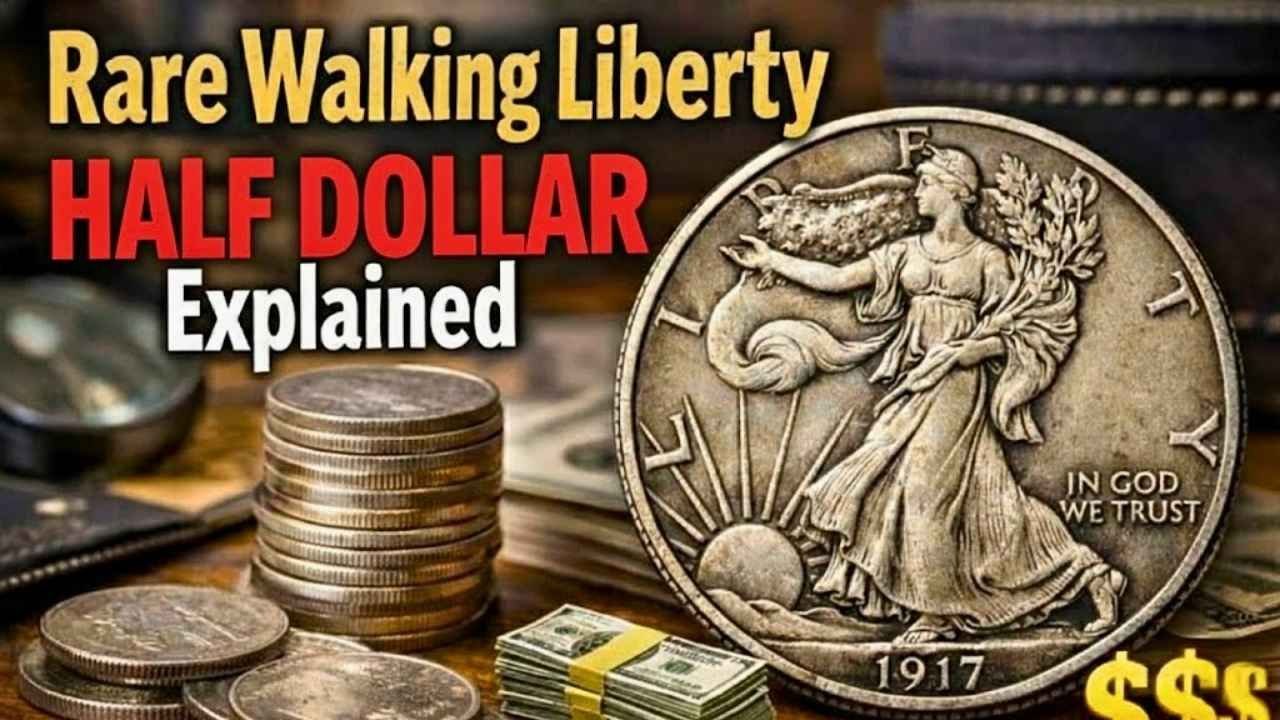
The 1917 Walking Liberty Half Dollar stands as one of the most admired and artistically celebrated coins in American numismatic history. More than a century after its release, this early issue continues to command impressive premiums, especially in high grades and scarce mintmark varieties.
For collectors and investors in 2026, the 1917 issue represents a compelling combination of historical importance, silver content, and rarity. While circulated examples remain accessible, pristine specimens and specific mintmark placements can reach well into the five-figure range.
The Legacy of the Walking Liberty Design

The Walking Liberty Half Dollar debuted in 1916, replacing the long-running Barber design. It was created by renowned sculptor Adolph A. Weinman, whose artistry elevated U.S. coinage to new aesthetic heights.
The obverse depicts Lady Liberty striding confidently toward the rising sun, draped in the American flag and carrying branches of laurel and oak, symbolizing civil and military glory. The reverse features a powerful eagle perched on a rocky outcrop, wings partially extended in a display of strength.
The design’s enduring popularity led to its revival decades later on the American Silver Eagle, reinforcing its status as one of the most iconic motifs in American coin history.
Why the 1917 Issue Is Especially Significant

The 1917 Walking Liberty Half Dollar holds particular importance for several reasons.
First, it represents only the second year of the series, placing it firmly among the early, historically desirable issues. Early-year coins often carry stronger collector appeal due to their connection to the series’ origins.
Second, 1917 is unique because of a mid-year design modification involving mintmark placement. Early in the year, mintmarks appeared on the obverse. Later issues shifted the mintmark to the reverse beneath the eagle.

This change created distinct collectible varieties from the same year, increasing complexity — and opportunity — for collectors.
Finally, the coin’s composition of 90% silver provides intrinsic value, offering a floor price tied to precious metal markets while allowing rarity and condition to drive premium upside.
Understanding the Mintmark Varieties
In 1917, the coin was struck at three U.S. Mint facilities:
Philadelphia (no mintmark)
Denver (D)
San Francisco (S)
The Philadelphia issue carries no mintmark and exists in a single design type. However, Denver and San Francisco coins appear in both obverse and reverse mintmark varieties.
Obverse Mintmark Variety
On early 1917-D and 1917-S coins, the mintmark appears on the obverse below the motto “In God We Trust.”
These coins were struck before the design modification and are sought after due to their lower relative survival rates in high grades.
Reverse Mintmark Variety
Later in 1917, the mintmark was moved to the reverse, near the eagle’s tail feathers.
Collectors pursuing a complete 1917 set often seek all five combinations:
- 1917 (Philadelphia, no mintmark)
- 1917-D Obverse
- 1917-D Reverse
- 1917-S Obverse
- 1917-S Reverse
This structural complexity makes the year particularly attractive within the broader Walking Liberty series.
1917 Walking Liberty Half Dollar Values in 2026
Values vary significantly based on grade, eye appeal, and certification status. Below are typical premium ranges for Mint State examples:
- 1917 (Philadelphia, MS-65): $1,000 – $3,000
- 1917-D Obverse (MS-65): $1,500 – $4,000
- 1917-D Reverse (MS-65): $2,000 – $5,000
- 1917-S Obverse (MS-65): $3,000 – $7,000
- 1917-S Reverse (MS-65): $5,000 – $10,000+
Circulated examples typically trade for hundreds rather than thousands, depending on condition. However, sharply struck, original-surface coins with strong luster command significant premiums.
High-grade San Francisco issues, particularly the reverse mintmark variety, remain among the most desirable within the year.
What Drives High Values?
Several factors influence pricing:
Strike Quality
Walking Liberty halves are known for uneven strikes. Fully detailed Liberty’s hand and gown lines, along with strong eagle feather definition, dramatically increase value.
Surface Preservation
Original mint luster and minimal abrasions are critical in Mint State grades.
Rarity in High Grades
While many coins were produced, relatively few survive in gem condition (MS-65 and above).
Certification
Coins authenticated and graded by reputable third-party services consistently achieve higher auction results.
In elite condition, some examples have exceeded published value ranges due to exceptional eye appeal and competitive bidding.
How to Identify Valuable 1917 Examples
Careful inspection is essential when evaluating a potential 1917 Walking Liberty Half Dollar.
First, confirm the date and identify the mintmark location. Check whether the “D” or “S” appears on the obverse beneath the motto or on the reverse below the eagle.
Examine high points of the design for wear. Liberty’s breast and leg, as well as the eagle’s wing feathers, are typically the first areas to show circulation.
Look for full strike detail, especially in Liberty’s hand and the rising sun rays. Coins with crisp detail and strong luster are significantly more valuable.
For higher-value pieces, professional grading provides authentication and a reliable condition assessment.
Market Trends in 2026
The Walking Liberty Half Dollar series remains one of the strongest-performing segments in classic U.S. coinage.
In 2026, demand is particularly robust for early dates in Mint State grades. Collectors increasingly favor historically significant issues with strong design appeal and tangible silver content.
Auction platforms have expanded global participation, allowing high-quality examples to reach broader audiences. Meanwhile, serious collectors continue to assemble registry-quality sets, intensifying competition for top-graded coins.
The 1917 varieties benefit directly from this environment due to their dual mintmark positions and early-series status.
Smart Collecting Strategies
Collectors pursuing the 1917 issue should:
Study mintmark placement carefully
Prioritize original surfaces over artificially bright coins
Focus on strike quality as well as numeric grade
Monitor auction archives for price trends
Store coins in controlled environments to preserve luster
A disciplined approach can help secure long-term value and protect investment potential.
Why the 1917 Walking Liberty Half Dollar Still Captivates
More than a century after its release, the 1917 Walking Liberty Half Dollar remains a powerful blend of artistry and rarity. Its graceful design, silver composition, and unique mintmark varieties create enduring collector appeal.
In today’s market, it offers both historical depth and tangible asset value — qualities increasingly appreciated in a modern portfolio. Whether pursued for beauty, legacy, or investment performance, the 1917 issue continues to stand among the most compelling silver coins in American numismatics.
For those fortunate enough to discover a well-preserved example, it may represent far more than fifty cents — it may be a hidden treasure worth thousands.