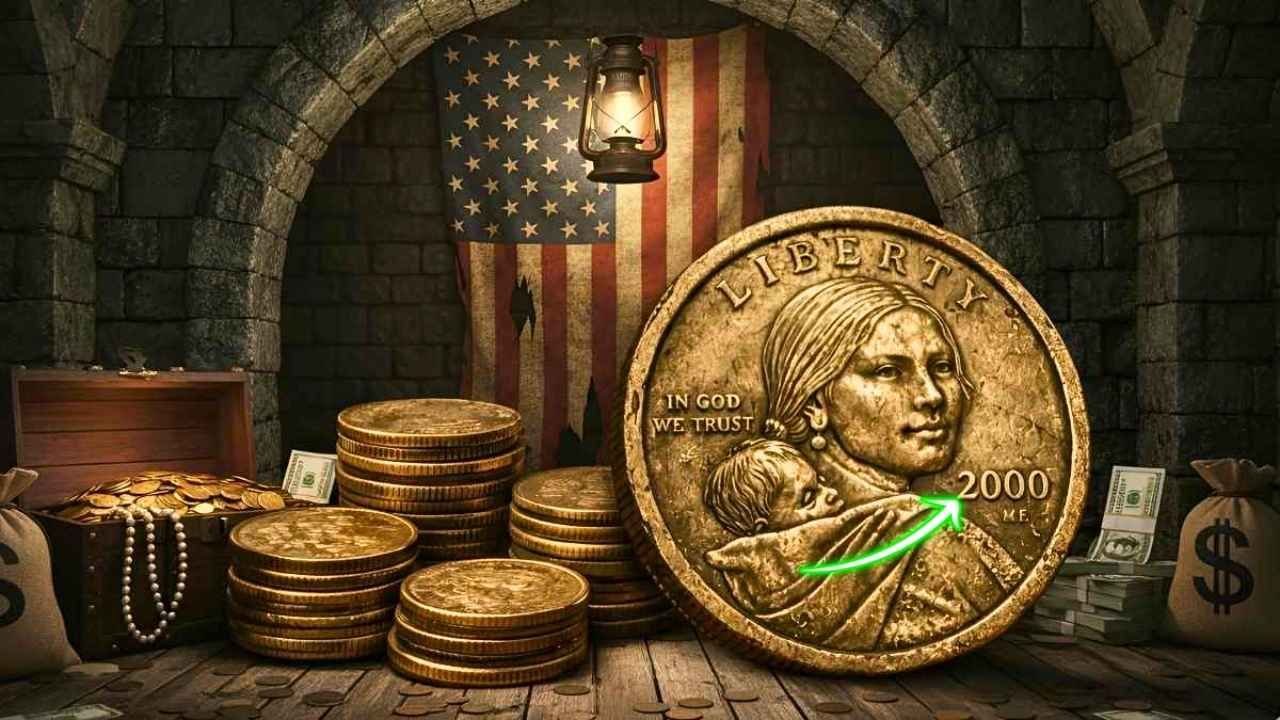
At first glance, the Sacagawea Dollar appears to be a modern circulation coin with modest appeal. Introduced in 2000, it carries a face value of just one dollar. Yet in rare circumstances, this golden-toned coin has crossed auction blocks for extraordinary sums — with select examples valued as high as $2.1 million in 2026.
For collectors and investors alike, the Sacagawea Dollar represents one of the most intriguing opportunities in modern American numismatics. Beneath its everyday appearance lies a story of experimental strikes, limited releases, and historic design significance.
The Origin of the Sacagawea Dollar

The Sacagawea Dollar was introduced by the United States Mint in 2000 as a replacement for the earlier Susan B. Anthony Dollar, which struggled in circulation due to confusion with the quarter.
To create a more visually distinctive coin, the Mint adopted a manganese brass alloy, giving the dollar its signature golden color.
The obverse was designed by artist Glenna Goodacre and features Sacagawea, the Shoshone woman who assisted the Meriwether Lewis and William Clark expedition across the American West. She is depicted carrying her infant son, Jean Baptiste.

The original reverse, created by Thomas D. Rogers Sr., shows a soaring eagle encircled by stars. In 2009, the reverse design began changing annually under the Native American Dollar program, while Sacagawea’s portrait remained constant.
Why Some Sacagawea Dollars Are Worth a Fortune
Although millions were minted, a handful of unique varieties have achieved elite collector status. The factors driving premium value include:
- Prototype or experimental strikes
- Limited promotional distributions
- Unique mint finishes
- Major minting errors
- Exceptional certified condition
Modern coin markets increasingly reward scarcity paired with strong provenance. When both elements converge, prices can escalate dramatically.
The Most Valuable Sacagawea Dollar Varieties
2000-P Cheerios Dollar

One of the most famous modern coin discoveries emerged from an unlikely source: cereal boxes.
In early 2000, approximately 5,500 Sacagawea Dollars were placed in promotional Cheerios boxes before the coin officially entered circulation. These special coins feature a prototype reverse design with enhanced eagle tail feathers.
For years, they went unnoticed. Today, confirmed 2000-P Cheerios Dollars in Mint State condition can range from $5,000 to $25,000, with top-graded examples commanding even higher premiums.
The key diagnostic is the sharply detailed tail feather pattern, which differs from standard circulation strikes.
2000-P Glenna Goodacre Presentation Dollars
As payment for her obverse design, Glenna Goodacre received 5,000 specially struck Sacagawea Dollars.
Unlike regular circulation coins, these pieces exhibit a distinctive burnished finish and were struck using specially prepared dies. Many were later authenticated and certified as “Goodacre Presentation” coins.
In MS-65 condition, values typically range between $1,000 and $5,000, depending on certification and eye appeal.
2000-W Gold Sacagawea Dollar
The most legendary rarity in the series is the 2000-W Gold Sacagawea Dollar.
Struck in 22-karat gold at the West Point Mint as part of an experimental test, only a small number were produced. These coins were never released for circulation and were primarily used for testing vending machine compatibility.
When authenticated and offered at auction, examples have reached between $500,000 and $2.1 million, placing them among the most valuable modern U.S. coins ever sold.
Their weight, metal composition, and “W” mintmark distinguish them from standard manganese brass issues.
Wrong Planchet Errors
Occasionally, Sacagawea Dollars were mistakenly struck on planchets intended for other denominations.
These wrong planchet errors often display unusual size, thickness, or color differences. Depending on the host planchet and condition, values can range from $5,000 to $50,000 or more.
Authentication through professional grading services is essential for these pieces, as incorrect weight and metal composition must be verified.
High-Grade Circulation Coins
Even ordinary circulation strikes can carry premium value in pristine condition.
Coins graded MS-67 or higher, particularly from lower-mintage years, may trade between $50 and $200. While not headline-making rarities, these examples appeal to collectors building registry-quality sets.
Sacagawea Dollar Value Overview (2026 Estimates)
- 2000-P Cheerios Dollar (MS-65): $5,000 – $25,000
- 2000-P Goodacre Presentation (MS-65): $1,000 – $5,000
- 2000-W Gold Sacagawea (MS-65): $500,000 – $2,100,000
- Wrong Planchet Error (MS-65): $5,000 – $50,000+
- High-Grade Circulation Coin (MS-67+): $50 – $200
Actual market performance varies based on grading population, auction timing, and documented provenance.
How to Identify a Valuable Sacagawea Dollar
Careful inspection is critical.
Examine the reverse tail feathers. Cheerios Dollars feature enhanced detailing not found on standard strikes.
Check the mintmark. A “W” mintmark indicates a West Point strike — a major rarity in gold format.
Assess metal composition. Gold experimental strikes differ significantly in weight and color.
Evaluate surface finish. Goodacre Presentation coins display a unique burnished texture.
Professional certification remains the safest path for verifying authenticity and maximizing resale value.
Market Trends in 2026
Sacagawea Dollar rarities continue to generate strong interest in 2026. Several trends support sustained demand:
- Growing investor focus on modern key-date coins
- Increased transparency through third-party grading population data
- Online auction accessibility expanding global participation
- Cross-generational collector engagement
While ultra-rare gold issues dominate headlines, mid-tier rarities such as Cheerios Dollars show consistent liquidity in private and public sales.
Modern coin collecting has matured into a sophisticated segment of the alternative asset market, blending history with strategic acquisition.
Smart Collecting Strategies
- Verify authenticity through reputable grading services
- Research die varieties before purchasing
- Prioritize documented provenance for elite rarities
- Store coins in secure, climate-controlled environments
- Track auction results to gauge market direction
Disciplined research remains the foundation of successful numismatic investing.
Final Thoughts
The Sacagawea Dollar proves that modern coins can harbor extraordinary value. From cereal box promotions to experimental gold strikes, this series demonstrates how rarity and historical context can transform a one-dollar coin into a multimillion-dollar asset.
In 2026, the pursuit of Sacagawea Dollar errors and special varieties continues to captivate collectors worldwide. Whether you are building a high-grade registry set or pursuing elite rarities, this golden coin offers a compelling blend of American heritage, innovation, and financial opportunity.